
Tesla.
Aluminum
or steel?
The answer depends on the model
and the panel.
Compare the outer panels on Model 3, Model Y, Model S, Model X and Cybertruck before planning a dent repair.
Compare the panels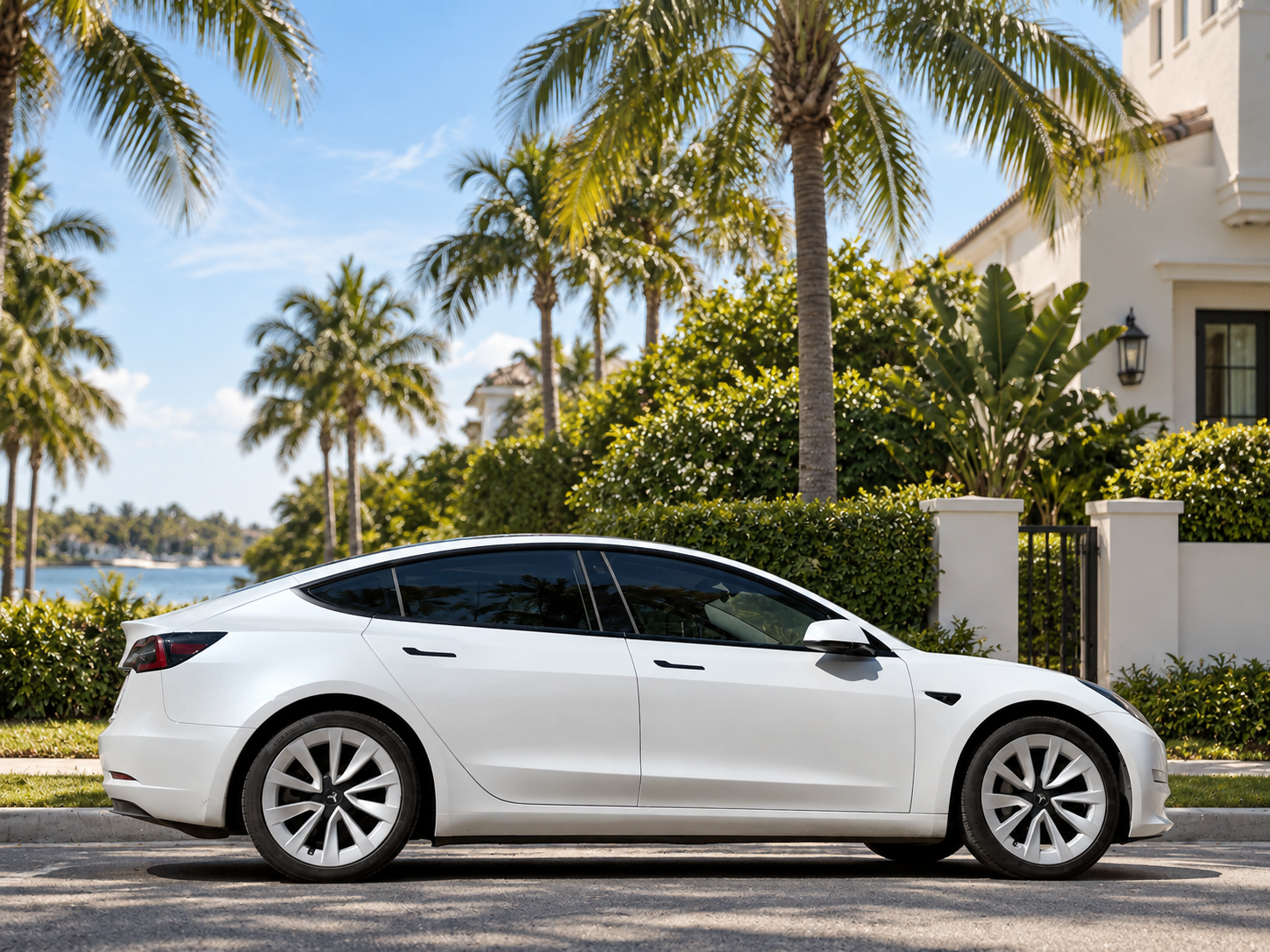
One brand.
Different metals.
The Tesla aluminum or steel question comes up constantly, and the honest answer is that it depends on the model and the exact panel. Model 3 and Model Y pair aluminum doors and hoods with steel everywhere else (fenders, quarter panels, trunk). Model S and Model X use aluminum for almost every outer panel. Cybertruck is stainless steel. Which one you have changes how a dent is repaired.
Are all Teslas aluminum? No.
If you have read a few dent-repair pages, you have probably seen the line that “Teslas are aluminum.” It gets repeated everywhere, and it is wrong. Some Tesla panels are aluminum, some are ordinary steel, and the Cybertruck is neither. This guide lays out exactly what each model is made of, panel by panel, and why that detail decides how your car gets fixed.
Tesla builds different cars from different materials, and the company sometimes changes materials between model years. Its own collision repair documentation identifies each panel with a color-coded diagram, and those diagrams show a mix of aluminum, mild steel, high-strength steel, and, on the Cybertruck, stainless. Aluminum shows up most on the flagship Model S and Model X. The mass-market Model 3 and Model Y lean more on steel for the parts that take the hardest hits.
So the myth is not just imprecise. It can lead to the wrong repair expectation. Treating a steel Model 3 fender as if it were aluminum, or the reverse, changes the technique and the price.
Start with
the exact panel.
Here is the Tesla aluminum or steel breakdown, panel by panel, for the current lineup. Anything listed as structure sits behind the visible skin and is never the surface a dent tech works on.
| Panel | Model 3 / Model Y | Model S / Model X | Cybertruck |
|---|---|---|---|
| Doors | Aluminum | Aluminum | Stainless steel |
| Hood | Aluminum | Aluminum | Stainless steel |
| Front fenders | Steel | Aluminum | Stainless steel |
| Rear quarter panels | Steel | Aluminum | Stainless steel |
| Trunk / tailgate | Steel | Aluminum | Stainless steel |
| Roof | Fixed glass | Fixed glass | Stainless steel |
| Structure behind panels | Steel (incl. high-strength) | Aluminum + steel; some magnesium on X | Steel + aluminum |
Five models.
Three material stories.
Model 3
& Model Y
ALUMINUM + STEELThese two share the same recipe: aluminum doors and hood, steel for the fenders, quarter panels, and trunk or tailgate. That split is handy to know. A dent on the door is aluminum work, while the identical dent on the fender right next to it is standard steel work, and steel is the more forgiving of the two. The Model 3 hood is a double-wall aluminum panel, which limits access from behind and often pushes a technician toward pulling the dent from the outside.
Model S
& Model X
ALUMINUM OUTER PANELSThe flagships are the source of the “all aluminum” myth, because on these two it is almost true. Doors, hood, fenders, quarter panels, and trunk are aluminum. Steel and, on the Model X, magnesium appear only in the structure behind the skin. For dent repair that means every visible panel gets the slower, gentler aluminum approach. The Model X also has falcon-wing rear doors packed with mechanisms and wiring, so dents near the hinges need extra care.
Cybertruck
STAINLESS STEELThe Cybertruck skin is thick, cold-rolled stainless steel with no paint at all. It is much harder to work than aluminum or mild steel and is heavily work-hardened from the factory. Tesla allows paintless techniques in principle, but in practice only small, shallow dents on flat areas come out cleanly. There is no paint to hide a flaw, and Tesla’s own scratch procedure refinishes a whole panel plane rather than a single spot. If you own one, treat every dent as its own question and get it inspected first.
Same dent.
Different approach.
Steel has memory. Worked correctly, it wants to spring back to its original shape. Aluminum has less of that memory, it hardens as it is manipulated, and it is stiffer, so it resists returning to form. A technician has to go slower on aluminum, use more passes, and keep the heat low, since Tesla caps how warm bonded and aluminum panels can get. Glue pulling, which lifts the dent from the front, is a common choice on aluminum because it avoids reaching behind a thin panel at all.
None of this makes aluminum a lost cause. Skilled techs repair aluminum dents every day. It simply takes someone who works the metal regularly, which is worth confirming before you hand over the keys.
Know what
you’re working with.
The quickest home test is a fridge magnet. It grabs firmly onto steel and slides right off aluminum. So on a Model 3 or Model Y, the magnet sticks to the fenders, quarter panels, and trunk, but not to the doors or hood. On a Model S or Model X it barely holds anywhere, because the outer skin is aluminum. On the Cybertruck the pull is weak at best, so the magnet trick is really for telling steel from aluminum on the 3, Y, S, and X. When in doubt, a shop can confirm the panel in seconds.
The next step is a panel assessment.
Get an individual assessment before deciding how the dent should be repaired.
See Tesla dent repair options in MiamiTesla materials,
explained.
Are all Teslas made of aluminum?
No. Model S and Model X use aluminum for nearly all outer panels, but Model 3 and Model Y use steel for the fenders, quarter panels, and trunk. The Cybertruck is stainless steel.
Is the Tesla Model 3 aluminum or steel?
Both. The doors and hood are aluminum, while the front fenders, rear quarter panels, and trunk are steel. Model Y follows the same pattern.
Are the Tesla Model S and Model X aluminum?
Yes. On both, every outer panel is aluminum. Steel and, on the Model X, magnesium are used only in the structure behind the skin.
What is the Tesla Cybertruck made of?
The exterior panels are thick stainless steel with no paint. It is much harder to reshape than aluminum or mild steel and is a poor candidate for standard paintless repair beyond small, shallow dents.
Does aluminum or steel matter for dent repair?
Yes. Aluminum has less memory and stretches more easily, so it takes longer, needs gentler technique, and adds a $50–150 surcharge over steel.
How can I tell if my Tesla panel is aluminum or steel?
Use a fridge magnet. It sticks to steel and slides off aluminum. On a Model 3 or Y the magnet holds on the fenders, quarters, and trunk but not the doors or hood.
Panel-material details reflect Tesla’s published collision repair information and can vary by model year. Always confirm the correct material and repair procedure for your specific Tesla model and year before any work. Dentlid connects vehicle owners with local PDR technicians and is not a body shop.
Let’s look
at your dent.
Send photos for an individual assessment. DentLID connects owners with independent PDR technicians. Availability varies by location.
Original photo: Chet Yeary II / Unsplash. Florida-style background edited with AI. Model 3 shown as an exterior reference.